
So, what exactly is digital health and wellness? It sounds pretty modern, right? Basically, it’s about using technology to help us stay healthy and manage our well-being. Think apps that track your steps, devices that monitor your heart rate, or even online tools that help you connect with doctors. It’s a big area that’s growing fast, and understanding its definition is the first step to seeing how it’s changing healthcare for all of us.
Key Takeaways
- Digital health uses technology to improve how we manage our health and well-being.
- It’s a broad term that covers many different tools, from apps to sensors.
- Digital health technologies can collect and analyze various types of health data.
- The goal is often to provide more personalized health support and insights.
- This field is reshaping healthcare by addressing common challenges and offering new solutions.
Understanding the Definition of Digital Health and Wellness
The Evolving Landscape of Digital Health
So, what exactly is digital health? It’s a term that’s been tossed around a lot lately, and honestly, it can feel a bit fuzzy. Think of it as the big umbrella covering how we use technology to manage our health and well-being. It’s not just one thing; it’s a whole bunch of things that have been popping up over the years. We’ve seen terms like eHealth and mHealth become common, and now digital health is the catch-all phrase. It’s all about using digital tools to make healthcare better, whether that’s through apps on your phone, wearable trackers, or even virtual doctor visits. The whole idea is to improve how we take care of ourselves and others.
Core Concepts and Technologies
At its heart, digital health is about collecting and using information to help people. This information can come from all sorts of places – your smartwatch tracking your steps, your doctor’s electronic records, or even sensors in your home. The challenge is that this data is all over the place and in different formats. Some of it is neat and tidy, like numbers in a spreadsheet, while other bits are messy, like notes from a doctor or photos. A big part of making digital health work is figuring out how to gather all this different data and make sense of it without overwhelming you. It’s like trying to put together a puzzle where all the pieces are different shapes and sizes. 
The goal is to make technology work for us, not the other way around. It’s about using digital tools to get a clearer picture of our health and make smarter decisions.
Digital Health as an Umbrella Term
Because digital health covers so much ground, it’s helpful to see it as a broad category. It includes things like:
- Telehealth and Telemedicine: Connecting with healthcare providers remotely.
- mHealth (Mobile Health): Using apps and mobile devices for health purposes.
- Wearable Technology: Devices that track health metrics like heart rate and activity.
- Electronic Health Records (EHRs): Digital versions of patient charts.
- Health Information Technology (HIT): The systems that manage health data.
Essentially, digital health is the integration of digital technologies into every aspect of health and wellness. It’s a dynamic field that’s constantly growing as new technologies emerge and find their place in how we manage our health.
Key Components of Digital Health and Wellness Frameworks
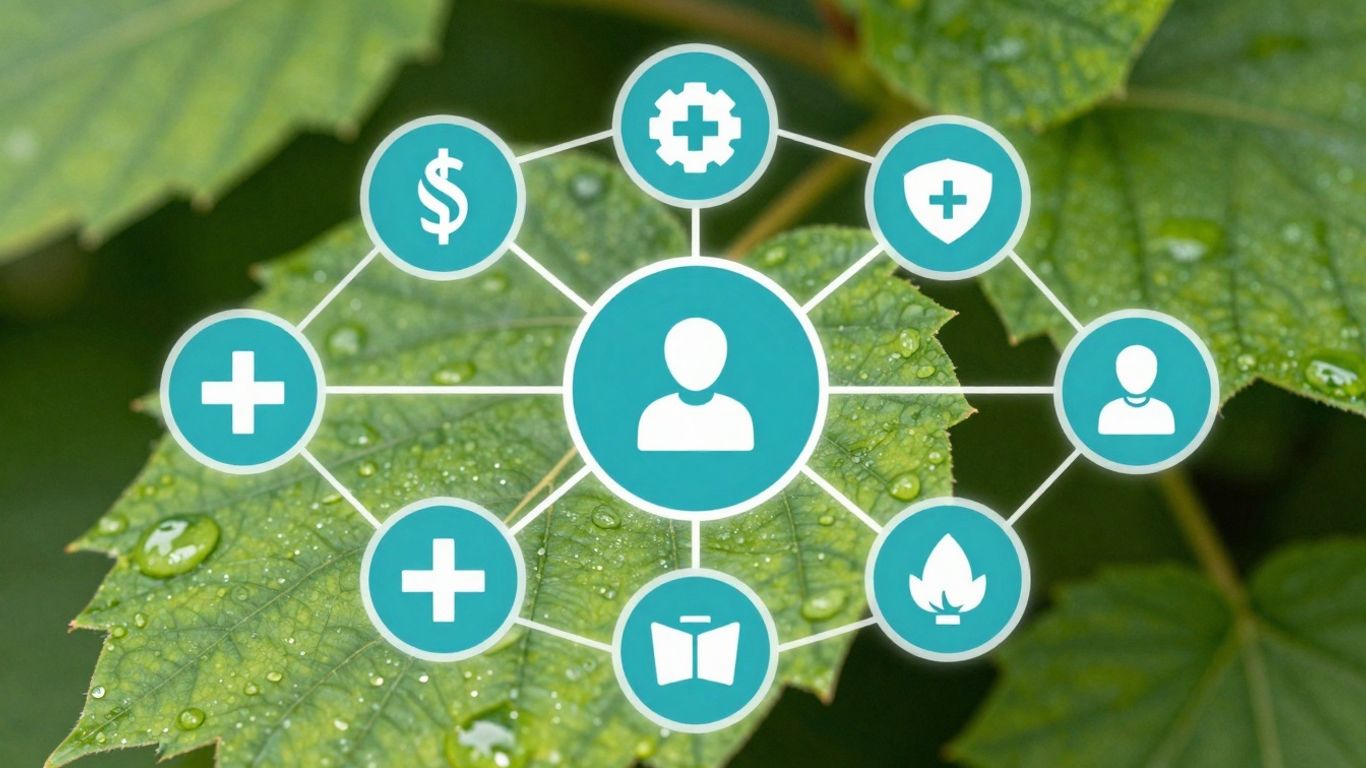
Building a solid digital health and wellness system isn’t just about slapping some apps together. It’s about creating a whole framework that can actually handle all the different kinds of health information out there. Think about it: you’ve got your basic medical records, sure, but then there’s also data from your smartwatch, maybe even notes you jot down about how you’re feeling, or information from your doctor’s office. It’s a real mix.
Data Heterogeneity and Abstraction
One of the biggest headaches is dealing with all these different data types. We’re talking structured stuff, like lab results in a neat table, and then unstructured things, like a doctor’s handwritten notes or even audio recordings. A good framework needs to be able to make sense of this mess. It needs to create a sort of "common language" so that different pieces of information can talk to each other, even if they started out looking completely different. This way, the system can pull together a clearer picture of someone’s health without the user having to be a data scientist.
Managing Structured and Unstructured Data
So, how do you actually handle this mix? It’s not just about storing it; it’s about organizing and using it. You need systems that can:
- Process structured data: This is the easier part, like numbers from blood tests or vital signs. Think databases and spreadsheets.
- Interpret unstructured data: This is trickier. It involves things like natural language processing to read doctor’s notes or analyzing audio from a telehealth call.
- Link related information: Connecting a patient’s reported symptoms with their wearable device data, for example.
The Role of Data Volume and Velocity
Then there’s the sheer amount of data and how fast it comes in. Wearables are constantly collecting information – heart rate, steps, sleep patterns. This creates a massive volume of data. Plus, some of this data, like continuous heart monitoring, is coming in at high speed (velocity). A framework has to be able to store all this without breaking a sweat and process it quickly enough to be useful. If you’re trying to catch a health issue early, waiting days for data analysis just won’t cut it.
Dealing with the sheer scale and speed of health data is a major challenge. Frameworks need robust storage and processing capabilities to handle the constant influx of information, especially for real-time monitoring. Otherwise, valuable insights can be missed simply because the system can’t keep up.
It’s a lot to think about, but getting these components right is what makes digital health tools actually work for people.
Digital Health Technologies and Their Applications
When we talk about digital health, it’s really about the tools and systems that make it all happen. Think of it as the engine behind the digital health revolution. These aren’t just abstract ideas; they’re actual technologies being used right now to change how we manage our health.
Defining Digital Health Technology (DHT)
Digital Health Technology, or DHT, is the broad category for any digital system used in healthcare. This includes everything from the software on your doctor’s computer to the sensors in a wearable device. It’s a pretty wide net, covering computing, connectivity, and software designed for health-related purposes. Some DHTs are part of medical devices, while others aren’t. It’s a bit like how a smartphone can be used for many things, but only some of its functions are considered medical.
Software as a Medical Device (SaMD)
Within the DHT umbrella, there’s a specific group called Software as a Medical Device, or SaMD. This is software that’s intended to be used for medical reasons on its own, not as part of a physical medical device. For example, an app that analyzes an EKG from a separate device to detect heart rhythm issues would be SaMD. It has a direct medical purpose and is regulated to ensure it’s safe and effective. The development of these tools is key to improving patient care.
Digital Therapeutics (DTx) and SiMD
Digital Therapeutics, or DTx, are a subset of SaMD. These are software programs designed to actually treat or help manage a disease or condition. They deliver a therapeutic intervention directly to the patient, aiming for a positive health outcome. Think of apps that guide you through cognitive behavioral therapy for anxiety or manage your diabetes through personalized coaching. Then there’s Software in a Medical Device, or SiMD. This is software that’s built into a hardware medical device or controls it. It’s not a standalone product like SaMD or DTx. The integration of these technologies is helping to create more connected healthcare experiences, as seen in studies combining telemedicine and remote monitoring for conditions like diabetes [3fd3].
Here’s a quick breakdown:
- Digital Health Technology (DHT): The overall category of digital tools in health.
- Software as a Medical Device (SaMD): Standalone software with a medical purpose.
- Digital Therapeutics (DTx): Software that provides a medical treatment.
- Software in a Medical Device (SiMD): Software that’s part of a hardware medical device.
The evolution of these technologies means we’re moving towards more personalized and accessible healthcare solutions. It’s not just about the technology itself, but how it’s applied to solve real health problems for people.
These technologies are not just theoretical; they are actively being developed and deployed. The field is growing rapidly, with new innovations appearing all the time. Understanding these distinctions is important as we see more digital tools enter the healthcare space.
Leveraging Data for Personalized Health Insights
It’s not just about collecting a mountain of health data; it’s about making sense of it all. Think of all the information your smartwatch tracks, or the notes your doctor jots down. Digital health tools aim to pull all that together so you can actually understand what it means for you.
Extracting Determinants of Health
This is where we move beyond just numbers. We’re trying to find the underlying reasons for your health status. It’s like being a detective for your own well-being. This involves looking at everything from your activity levels and sleep patterns to your medical history and even environmental factors if we can get that data.
- Activity Levels: How much you move, the intensity, and the type of movement.
- Sleep Quality: Duration, stages of sleep, and interruptions.
- Biometric Data: Heart rate, blood pressure, blood sugar readings.
- Medical History: Past illnesses, medications, family health trends.
Intelligent Processing for Personalized Support
Once we’ve gathered the raw information, smart systems come into play. These systems use things like artificial intelligence to sift through the data and find patterns. The goal is to provide advice that’s tailored specifically to your situation, not just generic health tips. For example, if your sleep data consistently shows you’re not getting enough deep sleep, an intelligent system might suggest specific bedtime routines or environmental changes based on your other health metrics.
The real magic happens when technology can connect the dots between seemingly unrelated pieces of information. It’s about turning raw data points into actionable insights that can genuinely improve how you feel and function day-to-day.
Population Management and De-identified Data
Looking at individual data is one thing, but looking at data from many people can reveal bigger trends. When all personal identifiers are removed (de-identified), this aggregated data can help public health officials understand health issues across communities. It can show where certain diseases are more common, how different lifestyle choices impact health on a large scale, or how effective public health interventions are. This helps in planning better healthcare strategies for everyone.
Enhancing User Experience in Digital Health
Making digital health tools actually useful and easy to use is a big deal. It’s not just about having the latest tech; it’s about making sure people can actually use it without pulling their hair out. Think about it: if a health app is confusing or doesn’t feel relevant, people just won’t use it, no matter how fancy it is. We need to focus on making these tools fit into people’s lives, not the other way around.
Person-Centric Service Delivery
Digital health systems often try to be one-size-fits-all, but that just doesn’t work when it comes to health. Everyone’s needs are different. A busy parent might just want a quick summary of their health stats, while a fitness buff wants all the nitty-gritty details. The systems need to be smart enough to figure out what each person needs and give them that information in a way that makes sense to them. This means moving away from generic advice and towards personalized support.
The goal is to make digital health feel like a helpful assistant, not a complicated chore. It should adapt to the user, not force the user to adapt to it.
Customizing Interfaces for Diverse Users
People interact with technology differently, and that’s especially true for health information. Some folks are tech-savvy and want all the options, while others prefer a simple, straightforward display. Imagine trying to use a complex medical dashboard when all you want to know is if you’ve had enough water today. It’s overwhelming. We need interfaces that can be tweaked. This could mean different display modes, adjustable font sizes, or even just simpler navigation paths for those who find technology a bit daunting. It’s about meeting people where they are.
Here are some ways interfaces can be made more adaptable:
- Simplicity Mode: Hides advanced features, showing only core metrics and functions.
- Accessibility Options: Includes adjustable text sizes, high-contrast modes, and voice command integration.
- Customizable Dashboards: Allows users to choose which data points are displayed prominently.
Dynamic User Engagement and Adoption
Getting people to use digital health tools is one thing; keeping them engaged is another. It’s a constant process. What motivates someone today might not work next week. Think about fitness trackers; many people start strong, tracking steps and sleep, but then the novelty wears off. To keep users involved, these tools need to offer fresh insights, set achievable goals, and show progress in a way that feels rewarding. Gamification, like earning badges or competing with friends (if they choose to share), can help. Also, providing reminders and celebrating small wins can make a big difference in sticking with healthy habits. It’s about making the journey feel worthwhile, not just a data-logging exercise. This is where understanding how people interact with digital health technology becomes really important.
| Feature | Initial Engagement | Long-Term Retention |
|---|---|---|
| Personalized Goals | High | Medium |
| Real-time Feedback | High | High |
| Gamified Challenges | Medium | Medium |
| Progress Tracking | High | High |
The Role of Digital Health in Modern Healthcare

Addressing Healthcare System Challenges
Healthcare systems everywhere are really feeling the pressure. Costs keep climbing, and dealing with an aging population that often has multiple health issues is a huge task. We’re seeing a big push for new ways to handle this, and digital health is right at the forefront. It’s not just about new gadgets; it’s about fundamentally changing how we approach care. The United Nations even put good health and well-being on their list of sustainable development goals, showing just how important this is globally. Digital solutions are seen as a major way to tackle these problems, making care more accessible, especially for people in rural areas, and giving patients more control.
The Impact of Digitalization and Entrepreneurship
Digitalization has shaken up so many industries, and healthcare is no exception. Think about all the apps, virtual doctor visits, and wearable tech that are now common. The pandemic really sped things up, too. This wave of digital innovation has also sparked a lot of entrepreneurial activity. Startups are popping up, trying to find new ways to use technology to solve healthcare problems. They’re looking at everything from AI for better diagnostics to platforms that help manage chronic conditions. It’s a dynamic space where new ideas are constantly being tested. Understanding the key healthcare industry trends can give you a better sense of where this is all heading.
Overcoming Hurdles to Digital Health Success
It’s not all smooth sailing, though. There are definitely some roadblocks. Regulations are in place to keep things safe and effective, but they can sometimes slow down innovation. Getting people to actually use these new tools is another big one. Building trust is key, especially when sensitive health information is involved. People need to feel comfortable and understand how their data is being used. Plus, making sure these digital tools work well with existing healthcare practices is a challenge. It requires careful planning and a focus on user needs.
- Regulatory Hurdles: Navigating complex rules and standards.
- User Adoption: Encouraging trust and consistent use.
- Interoperability: Connecting digital tools with existing systems.
- Data Privacy: Protecting sensitive patient information.
The drive to improve healthcare outcomes while managing costs is pushing innovation. Digital health offers a promising path, but its widespread adoption depends on overcoming practical challenges related to regulation, user acceptance, and integration into current healthcare workflows. It’s a balancing act between rapid technological advancement and the careful implementation needed for patient safety and trust.
Wrapping It Up
So, we’ve talked a lot about what digital health and wellness really means. It’s not just about gadgets or apps, though those are a big part of it. It’s about using technology to get a clearer picture of our health, both the physical stuff and how we feel overall. This means dealing with all sorts of information, from your step count to maybe even more complex medical details, and making sure it all makes sense. The goal is to use this tech to help us make better choices for ourselves, whether that’s through personalized tips or just understanding our bodies a bit more. It’s a big, evolving area, and figuring out how to make it work for everyone is still a work in progress, but the potential to help people live healthier lives is definitely there.
Frequently Asked Questions
What exactly is digital health and wellness?
Digital health and wellness is all about using technology, like apps and smart devices, to help people stay healthy and manage their well-being. Think of it as using computers and the internet to make healthcare easier and more personal, from tracking your steps to talking to your doctor online.
Why are there so many different terms like eHealth, mHealth, and telehealth?
These terms are like different flavors of the same ice cream! They all fall under the big umbrella of ‘digital health.’ eHealth is a broad term for using electronic tools in healthcare, mHealth specifically uses mobile devices like phones, and telehealth lets you see a doctor remotely. They all aim to use technology to improve health.
What’s the difference between a Digital Health Technology (DHT) and Software as a Medical Device (SaMD)?
A DHT is any digital tool used for health, like a fitness tracker app. SaMD is a special kind of DHT that’s actually considered a medical device itself, like software that helps diagnose a condition. It’s software that does a medical job on its own.
What are Digital Therapeutics (DTx)?
Digital Therapeutics, or DTx, are like digital medicines. They are special software programs designed to help treat or manage health conditions, like diabetes or anxiety, by giving you specific interventions and guidance to improve your health.
Why is it important to collect so much different health data?
Our health is complex! We need lots of different types of information – like how much we move, what we eat, how we feel, and even our medical history – to get a full picture. Collecting this diverse data helps create more personalized and effective health advice and treatments.
What challenges do we face in making digital health work for everyone?
There are a few bumps in the road. Sometimes it’s hard to make sure all the different technologies work together smoothly. Also, we need to make sure people trust these tools with their personal health information and find them easy and helpful to use. Getting everyone on board and making sure the technology is safe and effective is key.