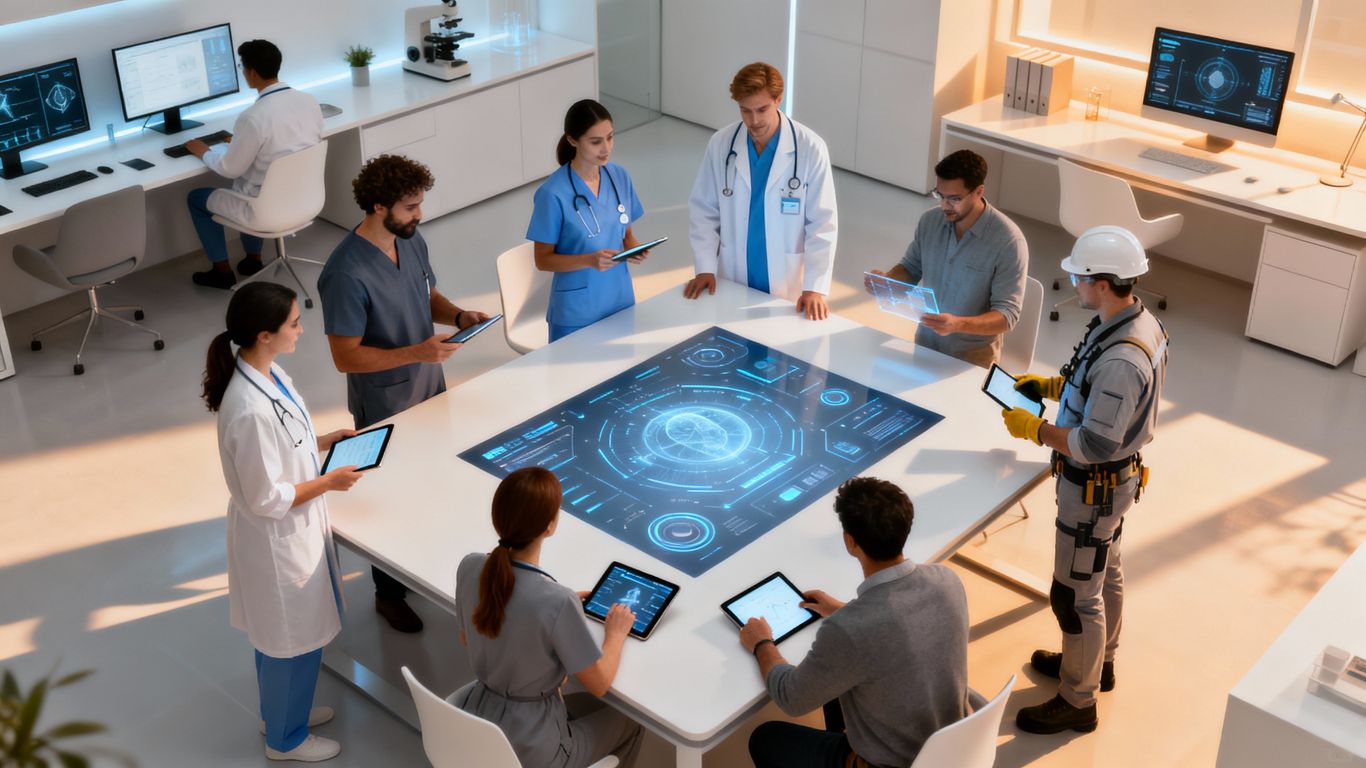
So, you’re thinking about taking your career to the next level in healthcare? The way we do things in hospitals and clinics is changing fast, mostly because of all the new tech. If you want to be part of that change and actually help make things better for patients and the people who care for them, you might want to look into a graduate certificate in clinical informatics and digital health. It sounds fancy, but it’s really about learning how to use technology and data to make healthcare work smarter. I’ve been looking into it, and it seems like a pretty solid way to get ahead.
Key Takeaways
- A graduate certificate in clinical informatics and digital health can help you get involved in the big tech changes happening in healthcare.
- You’ll learn skills like data analysis and how to manage health information, which are needed by hospitals and health services.
- This kind of certificate can open doors to new jobs or help you move up in your current field, like becoming a clinical informatics analyst or a digital health leader.
- There are different ways to pay for it, including government help and scholarships, and applying usually involves an online process with specific dates to watch out for.
- Getting this certificate can make you a more valuable employee and someone who can really make a difference in how healthcare is delivered.
Understanding Clinical Informatics and Digital Health
Healthcare is changing, and fast. We’re not just talking about new medicines or treatments anymore; the whole way we manage health information and interact with patients is getting a digital makeover. This shift, often called the digital transformation of healthcare, is all about using technology to make things better, more efficient, and more accessible for everyone involved.
The Digital Transformation of Healthcare
Think about it. Not too long ago, patient records were mostly paper. Now, electronic health records (EHRs) are becoming the norm. This isn’t just about storing information; it’s about making it accessible to doctors, nurses, and even patients themselves, wherever they are. We’re seeing telehealth services expand, allowing people to see a doctor from their living room. Wearable devices are tracking our health metrics in real-time. AI is starting to help diagnose conditions and personalize treatment plans. This digital wave is fundamentally reshaping how healthcare is delivered and experienced. It’s a complex but exciting time, moving us towards a more connected and data-driven health system. 
Key Skills for Health Professionals
So, what does this mean for you if you’re working in healthcare? It means you need to be ready for these changes. You don’t necessarily need to be a coding wizard, but having a grasp of digital tools and how they apply to patient care is becoming really important. Here are some areas that are gaining traction:
- Data Literacy: Understanding how to read, interpret, and use health data effectively.
- Technology Familiarity: Being comfortable with EHR systems, telehealth platforms, and other digital health tools.
- Problem-Solving: Figuring out how technology can solve real-world healthcare challenges.
- Communication: Explaining technical concepts to patients and colleagues.
- Adaptability: Being open to learning new systems and processes as technology evolves.
Driving Innovation in Healthcare Services
Clinical informatics and digital health aren’t just about keeping up; they’re about pushing healthcare forward. It’s about finding new ways to improve patient outcomes, make the jobs of healthcare providers easier, and reduce costs. For example, using data analytics can help identify populations at risk for certain diseases, allowing for targeted preventative care. Implementing better information systems can reduce medical errors and improve patient safety. The goal is to create a healthcare system that’s not only more technologically advanced but also more patient-centered and effective.
The integration of technology into healthcare is no longer a futuristic concept; it’s a present-day reality. Professionals who can bridge the gap between clinical practice and digital innovation are becoming indispensable. This requires a blend of clinical knowledge, technical aptitude, and a forward-thinking mindset to adapt to the ever-changing landscape of health information and patient care.
Curriculum and Learning Outcomes
Core Coursework in Health Informatics
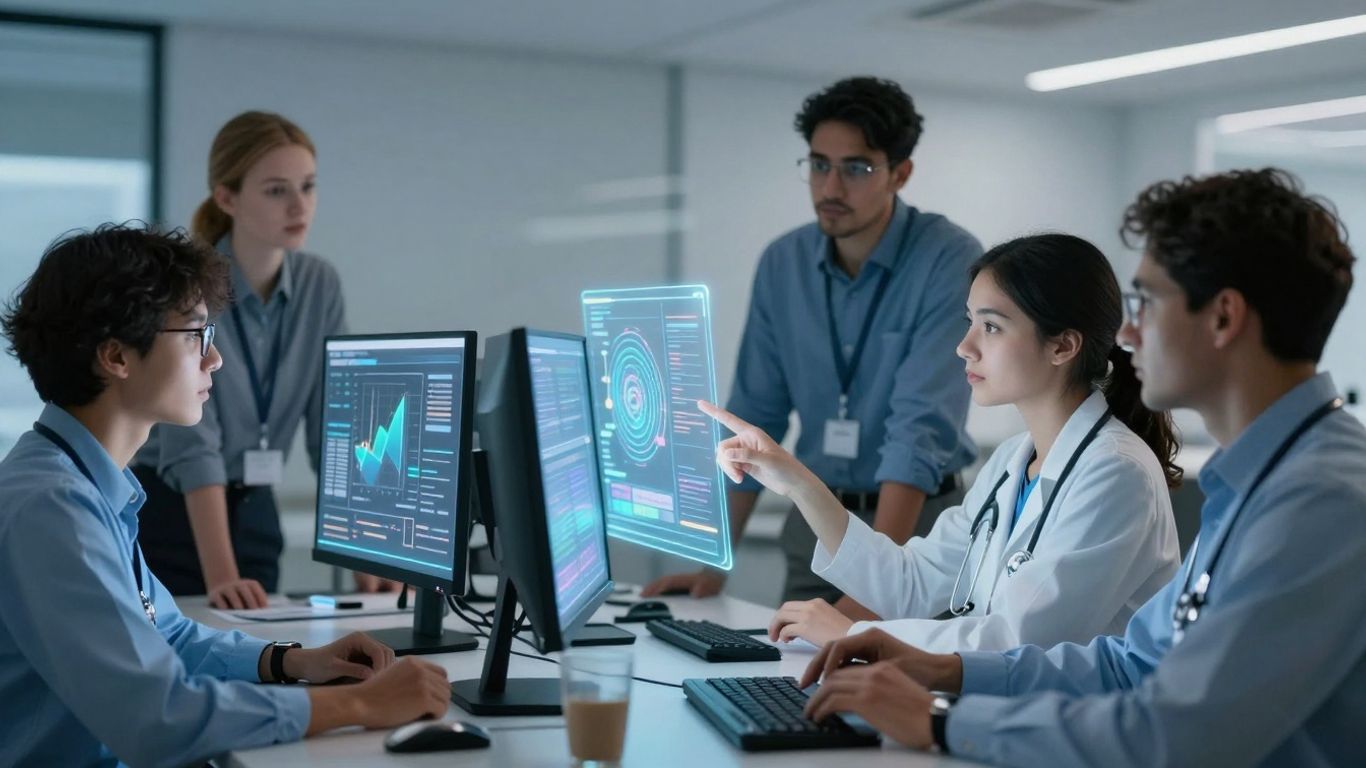
This program dives into the foundational elements of health informatics, giving you a solid base to build upon. You’ll explore how information science and medical technology come together in everyday healthcare practice. Think of it as learning the language and tools needed to make health systems work better through technology. It’s all about understanding how to use information systems effectively and ethically.
Data Analytics and Management of Health Information
Here, we get practical. You’ll learn how to gather and analyze health data, which is super important for understanding population health needs. We’ll look at how to use this data to make smarter decisions and support evidence-based practices. It’s not just about crunching numbers; it’s about turning that data into actionable insights that can improve care. You’ll also cover how to manage health information securely and efficiently.
Emerging Technologies in Healthcare
This section is where things get exciting. We’ll explore the latest tech like AI, robotics, and telehealth, and how they’re changing healthcare access and delivery. You’ll learn about mobile health, wearables, and patient-centered technologies. The goal is to equip you to identify and use these new tools to innovate and improve health services.
Here’s a look at some of the topics you might cover:
- Telehealth capabilities and expanding healthcare access.
- Artificial Intelligence (AI) and its applications in health.
- Cloud computing and data analysis for health information systems.
- Mobile technologies and wearable devices.
- Blockchain for health data security.
The digital health landscape is always shifting. Staying current with new technologies isn’t just a good idea; it’s becoming a necessity for anyone working in healthcare. This part of the program helps you get ahead of the curve.
Career Advancement Opportunities
So, you’ve got this graduate certificate in Clinical Informatics and Digital Health. What does that actually mean for your career? Well, it opens up a lot of doors, honestly. Think about it: healthcare is changing fast, and it needs people who understand both the clinical side and the tech side. This certificate positions you perfectly for that.
Roles in Clinical Informatics
This is where many people start, and it’s a solid place to be. You’re not just a nurse or a doctor anymore; you’re someone who can make the systems work better. You might find yourself as a Clinical Data Analyst, digging into patient records to find trends or ways to improve care. Or perhaps a Clinical Data Specialist, making sure all that information is accurate and accessible. These roles are all about using data to make smarter decisions in patient care. It’s a hands-on way to see the impact of your work. You’ll be working with electronic health records (EHRs), analyzing patient outcomes, and helping to implement new digital tools. It’s a dynamic field, and the demand for these skills is only going up. You can explore some of these roles further by looking into clinical informatics analyst positions.
Leadership Positions in Digital Health
Once you’ve got some experience under your belt, the sky’s the limit. This certificate can be a stepping stone to leadership. Imagine being a Chief Digital Health Officer or a Director of Quality and Safety. These positions involve shaping the future of how technology is used in a healthcare setting. You’ll be responsible for strategy, implementation, and making sure everything aligns with the organization’s goals and patient needs. It’s about leading teams, managing projects, and driving change. Some common paths include:
- EMR Manager
- Health Informatics Consultant
- Chief Medical Information Officer
- Director of Health Information Management
Impact on Patient Outcomes and Clinician Experience
Ultimately, all this tech and data analysis is about making healthcare better for everyone. As a clinical informaticist, you play a direct role in improving patient safety and outcomes. By optimizing systems and ensuring data is used effectively, you can help reduce medical errors, improve diagnostic accuracy, and personalize treatment plans. Think about how much smoother things can be when patient information is readily available and accurate. It also makes life easier for doctors and nurses. When the technology works well and supports their workflow, they can spend less time wrestling with computers and more time with their patients. This certificate equips you to be that agent of positive change.
The integration of digital tools and data analysis in healthcare is not just about efficiency; it’s about fundamentally improving the quality and accessibility of care. Professionals with this specialized knowledge are becoming indispensable in modern healthcare organizations.
Here’s a look at the potential growth in related fields:
| Field | Projected Growth (2023-2033) | Source |
|---|---|---|
| Health Care Administration | 16% | Bureau of Labor Statistics |
| Data Analysts | 35% | Bureau of Labor Statistics |
This shows a clear trend: the need for skilled professionals in health data and digital health is significant and growing.
Admission and Application Process
Entry Requirements for the Program
Getting into the Graduate Certificate in Clinical Informatics and Digital Health is pretty straightforward if you’ve got the right background. Basically, you’ll need a bachelor’s degree. If your degree is in a field like medicine, nursing, allied health, psychology, or something similar, that’s great. But don’t worry if your degree is in a different area, like business or engineering; you can still apply if you have at least two years of full-time work experience in a related field. For those who haven’t completed a full degree, having completed post-secondary studies along with three years of relevant work experience can also be considered, though these applications are looked at individually. A key thing to remember is your Grade Point Average (GPA) from your previous studies – you’ll generally need a GPA of 4.0 on a 7-point scale. It’s always a good idea to check the specific GPA equivalents for your country and previous qualifications.
Application Deadlines and Procedures
Applying is done online, and it’s best to get your application in early. For those looking to start in Semester 1, the deadline is typically January 31st of that year. Keep in mind that visa processing times can vary, so the sooner you apply and accept any offer, the better. You can find the program code for the Graduate Certificate in Clinical Informatics and Digital Health on the university’s admissions page, which is 5729. It’s also important to note that this specific program doesn’t qualify for an Australian Student Visa (subclass 500). If you plan to study in Australia, you’ll need to have an existing Australian visa or residency that allows for study.
Support for Aboriginal and Torres Strait Islander Applicants
If you identify as Aboriginal or Torres Strait Islander, there’s dedicated support available to help you through the application process and beyond. The Aboriginal and Torres Strait Islander Studies (ATSIS) Unit is there to answer any questions you might have about applying or about university life in general. They can provide guidance and assistance to make your transition as smooth as possible. Reaching out to them is a great first step if you’re looking for tailored support.
Applying for further education can feel like a big step, and knowing the requirements and deadlines is half the battle. Universities often have resources to help you figure out if you’re on the right track and what you need to do next. Don’t hesitate to use them.
Here’s a quick look at the typical entry requirements:
- Bachelor’s Degree: In a relevant field (e.g., health sciences, medicine, nursing) OR in any field plus 2 years of relevant work experience.
- Post-Secondary Studies: Plus 3 years of relevant work experience (assessed individually).
- GPA: Minimum of 4.0 on a 7-point scale.
Remember to check the official university website for the most current deadlines and specific application instructions.
Financial Considerations for Your Education
Thinking about getting a graduate certificate in clinical informatics and digital health is a big step, and figuring out the money side of things is just as important as the coursework. It’s an investment, for sure, and understanding the costs upfront can make the whole process smoother. Let’s break down what you might expect.
Tuition Fees and Associated Costs
The cost of a graduate certificate can vary quite a bit depending on the institution and whether you’re studying online or in person. Some programs might charge per credit hour, while others have a set semester or program fee. For example, one program might list tuition at around $762 per credit hour, which adds up quickly. Others might have an annual fee that’s roughly $4,770 for a full course load. Don’t forget to factor in other potential costs like enrollment fees, books, and any technology you might need. It’s a good idea to look at the total estimated cost for the entire program, not just per semester. The average cost for an online health informatics degree in the USA is approximately $32,980, representing a substantial yet achievable financial commitment for prospective students. This can be a significant investment.
Scholarship and Financial Aid Options
Luckily, there are often ways to help offset these costs. Many universities offer a variety of scholarships specifically for graduate students, and some might even have awards tailored to students in health informatics or digital health programs. It’s worth digging into what’s available at the schools you’re interested in. Beyond scholarships, there’s also financial aid. This can include federal loans, grants, or even institutional aid. Applying for financial aid usually involves filling out specific forms, so be sure to check the deadlines for those applications as well. Sometimes, you might be eligible for more than one scholarship, which can really make a difference.
Government Assistance and Loan Schemes
Depending on your country of residence, government programs might be available to help fund your education. In some places, like Australia, domestic students in Commonwealth-supported places might be eligible for schemes like HECS-HELP. This is a loan that helps cover your student contribution amounts, and you typically start paying it back once you’re earning above a certain income threshold. It’s a way to spread out the cost of your education. For international students, financial aid might come from their home country or through specific international student programs offered by the host country’s government. Always check the specific eligibility requirements for any government assistance or loan program you’re considering.
Planning your finances early can reduce a lot of stress later on. It’s not just about the tuition; think about living expenses, potential travel, and any other fees that might pop up. Getting a clear picture of the total financial commitment will help you make informed decisions about which program is the best fit for you.
Here’s a quick look at potential costs:
- Tuition Fees: Can range from per credit hour charges to annual program fees.
- Associated Costs: Books, technology, enrollment fees, and living expenses.
- Scholarships: Institutional, program-specific, or general graduate scholarships.
- Financial Aid: Federal loans, grants, and institutional aid.
- Government Assistance: Loan schemes or direct funding programs.
The Value of a Graduate Certificate

Enhancing Your Professional Profile
Getting a graduate certificate in clinical informatics and digital health isn’t just about learning new stuff; it’s a smart move for your career. Think of it as a specialized tool kit that makes you stand out. In today’s healthcare world, which is changing fast with technology, having these specific skills is a big deal. It shows you’re serious about staying current and can handle the digital side of things. This can open doors to new jobs or promotions you might not have considered before.
Becoming an Agent of Change in Healthcare
This certificate equips you to be more than just a participant in healthcare; it positions you to lead. You’ll learn how to use data and technology to actually make things better for patients and for the people working in healthcare. It’s about finding problems and then using your new knowledge to fix them, whether that’s improving how patient records are managed or making sure new digital tools are used effectively. You become someone who can drive positive changes.
Meeting the Demand for Digital Health Expertise
Let’s be real, healthcare is going digital, and it’s happening fast. Hospitals, clinics, and health organizations everywhere need people who know how to manage health information systems, analyze data, and implement new digital solutions. This certificate directly addresses that need. It’s not just a piece of paper; it’s proof that you have the skills employers are actively looking for right now. The job market for these skills is growing, and having this certificate puts you right in the middle of it.
Here’s a quick look at what you might learn:
- Fundamentals of Health Informatics
- Management of Health Information
- Healthcare Data Analytics
- Healthcare Information Systems
- Healthcare Project Management
The healthcare industry is constantly evolving, and staying ahead means adapting to new technologies and ways of working. A graduate certificate provides focused training that can quickly make you a more effective and sought-after professional in this dynamic field.
Wrapping Up
So, if you’re looking to make a real difference in how healthcare works, this graduate certificate could be your next step. It’s not just about learning new tech; it’s about using that tech to help patients and make things smoother for doctors and nurses. The field is growing fast, and having these skills means you’ll be ready for whatever comes next in digital health. Think about it – you could be leading the charge in making healthcare better for everyone. It’s a solid way to boost your career and contribute to something important.
Frequently Asked Questions
What is clinical informatics and digital health?
Think of it like this: healthcare is getting a digital makeover! Clinical informatics and digital health are all about using technology, like computers and apps, to make healthcare better. It helps doctors and nurses share information faster, understand patient data, and find new ways to care for people using smart tools.
What kind of jobs can I get with this certificate?
This certificate can open doors to many cool jobs! You could become a digital health analyst, helping manage patient information systems, or a health informatics consultant, advising hospitals on how to use technology. It can also lead to leadership roles where you help shape the future of digital healthcare.
Do I need to be a doctor or nurse to study this?
Not necessarily! While it’s great if you have a healthcare background, the program is also for IT professionals who work in hospitals or want to. If you’re interested in how technology and health connect, and you have a college degree, you might be a great fit.
How long does the program take to complete?
Many programs are designed to be flexible. Some can be finished in about a year if you study full-time, while others might take a bit longer if you study part-time. This allows you to balance your studies with work or other responsibilities.
What will I learn in this program?
You’ll learn how to use health data smartly. This includes understanding computer systems used in hospitals, how to manage health information safely, and how to use data to make healthcare decisions. You’ll also explore new technologies like AI and telehealth that are changing how we get care.
How much does it cost, and are there ways to get help paying for it?
The cost can vary, but there are often options to help. Many programs offer scholarships or financial aid. In some countries, like Australia, government programs might help cover the costs or offer loans that you pay back later when you have a good job.