

Getting a handle on your health in 2026 doesn’t need to be complicated. Forget those huge, overwhelming New Year’s resolutions that fizzle out by February. The real secret is in the small, consistent steps you take every day. And guess what? A smart health journal is your best friend for this. It’s like having a personal guide that helps you see what’s working, what’s not, and how to keep moving forward. Think of it as your own personal wellness dashboard, making sense of your daily habits and helping you build a healthier you, one entry at a time. It’s not about perfection, it’s about progress.
Key Takeaways
- Start your day with intention by using your smart health journal for morning routines and self-reflection, setting a positive tone.
- Set clear, achievable health goals using a structured approach like SMART, and use your journal to track progress and overcome obstacles.
- Integrate mindful practices into your daily life by logging nutrition, movement, and recovery, and consider digital detox periods for mental clarity.
- Build lasting habits by using your smart health journal for affirmations, prioritizing rest, and creating accountability with others.
- Make your smart health journal a long-term tool by scheduling regular reflection days and using it for year-end reviews to maintain momentum.
Harnessing Your Smart Health Journal for Daily Clarity
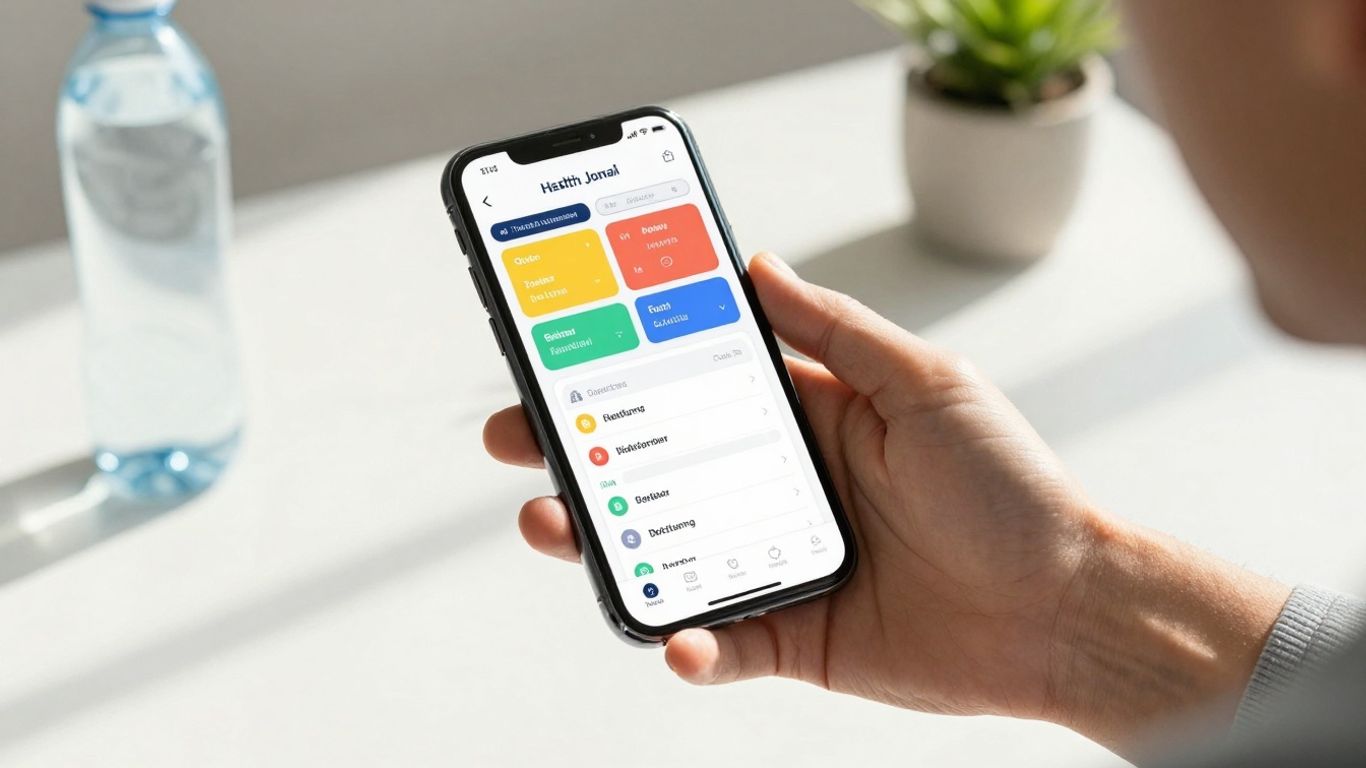
Starting your day with intention can really set the tone for everything that follows. It’s like giving yourself a little roadmap before you even step out the door. Your smart health journal is the perfect tool for this. It’s not just about jotting down what you ate or how much you moved; it’s about connecting with yourself on a deeper level. 
Establishing Intentional Morning Routines
Think of your morning journal entry as a gentle wake-up call for your mind. Before the emails start pinging or the to-do lists begin to pile up, take a few minutes to ground yourself. What’s one thing you want to focus on today? It could be as simple as "I want to feel more patient" or "I will drink enough water." Writing down a single, clear intention can guide your actions throughout the day without feeling overwhelming. It’s also a great time to list three things you’re genuinely thankful for. This simple act shifts your perspective from what’s lacking to what’s abundant, creating a more positive outlook right from the start.
The Power of the Pen for Self-Reflection
There’s something about physically writing things down that makes them feel more real, more concrete. When you’re reflecting in your journal, don’t just list facts. Ask yourself how you felt during certain events, what challenged you, and what brought you joy. This isn’t about judgment; it’s about understanding. By regularly reviewing your entries, you start to see patterns in your moods, energy levels, and behaviors. This self-awareness is key to making lasting changes. It’s like having a conversation with your past self, learning from her experiences to guide your future decisions.
Taking a few moments each day to write down your thoughts and feelings can significantly reduce stress and improve your overall sense of well-being. It’s a quiet space just for you.
Cultivating Inner Balance Through Mindfulness
Mindfulness isn’t about emptying your mind; it’s about paying attention to what’s happening right now, without judgment. Your journal can be a tool for this. After a busy day, spend a few minutes noting down any moments where you felt present and calm. What were you doing? Who were you with? Conversely, jot down times when you felt scattered or stressed. What triggered it? This practice helps you identify what brings you back to center and what pulls you away. Even short bursts of mindful observation, recorded in your journal, can help you build a greater sense of inner peace and control over your reactions to daily life.
Strategic Goal Setting With Your Smart Health Journal
Setting health goals can feel like trying to hit a target in the dark. You know you want to improve, but where do you even start? Your smart health journal is the perfect tool to bring that target into focus. It’s not just about wishing for better health; it’s about making a concrete plan.
Making Your Health Goals SMART
Vague resolutions like "eat healthier" or "get more exercise" tend to fizzle out fast, especially when life gets hectic. That’s where the SMART framework comes in handy. It helps you turn those fuzzy ideas into clear, actionable steps. Think about it:
- Specific: What exactly do you want to achieve? Instead of "eat better," try "eat at least one serving of vegetables with lunch and dinner every day."
- Measurable: How will you know you’re making progress? This could be tracking your veggie intake on a daily log or noting your energy levels after meals.
- Achievable: Is this goal realistic for your current life? Aiming to run a marathon next week if you’ve never run before probably isn’t. Maybe start with a 30-minute walk three times a week.
- Relevant: Does this goal actually matter to you and your overall well-being? If your aim is to feel more energetic, then focusing on sleep quality might be more relevant than tracking your water intake.
- Time-bound: When will you achieve this by? Setting a deadline, like "by the end of next month," creates a sense of urgency and helps you stay on track.
When your goals are SMART, they become much easier to pursue and achieve.
Acknowledging and Overcoming Roadblocks
Life happens, right? You’ll have days where sticking to your plan feels impossible. Maybe you’re tired, stressed, or just not feeling it. Your journal is the place to be honest about these moments. Instead of beating yourself up, use it to figure out why you hit a snag. Was it a lack of planning? An unexpected event? Identifying these roadblocks is the first step to finding solutions.
Sometimes, the biggest hurdle isn’t the goal itself, but our own mindset about it. Recognizing that setbacks are part of the process, not a sign of failure, is key to moving forward.
Think about what you can do differently next time. If a busy workday derailed your healthy lunch plans, maybe you need to prep meals the night before. If you skipped your workout because you were too tired, perhaps scheduling it for the morning would work better. Your journal helps you learn from these experiences.
Tracking Progress for Sustained Motivation
Seeing how far you’ve come is a huge motivator. Your smart health journal allows you to visually track your progress. This could be through simple checkmarks, graphs, or notes about how you feel.
Here’s a look at how tracking can help:
- Celebrate Small Wins: Did you hit your water goal for a week straight? Acknowledge it! These small victories build momentum.
- Identify Patterns: Notice that you feel more energetic on days you get enough sleep? Or that your digestion improves when you eat more fiber? Your journal highlights these connections.
- Stay Accountable: Looking back at your entries reminds you of your commitment. It’s hard to ignore your own written intentions.
| Metric | Week 1 | Week 2 | Week 3 | Week 4 |
|---|---|---|---|---|
| Sleep (hours) | 6.5 | 7 | 7.5 | 7 |
| Steps (daily) | 5000 | 6500 | 7000 | 6800 |
| Mood (1-5) | 3 | 4 | 4 | 4 |
Seeing this kind of data can be incredibly encouraging. It shows you that your efforts are paying off, making it easier to keep going even when motivation dips.
Integrating Your Smart Health Journal Into Your Lifestyle
Making your wellness goals a real part of your day-to-day life is where the magic really happens. It’s not about adding a ton of extra tasks, but about weaving these practices into what you already do. Think of your smart health journal as your personal assistant, helping you make small, consistent choices that add up.
Digital Detox Strategies for Mental Space
We live in a world that’s constantly buzzing with notifications. It’s easy to get caught up in the digital noise, and honestly, it can leave you feeling pretty drained. Your phone doesn’t have to run your life, though. You can create some healthy boundaries. Try setting aside a "power hour" each day where you intentionally put screens away. During this time, pick up a physical book, go for a walk outside, or just have a quiet moment to yourself. Even cutting down your screen time by an hour or so can make a big difference in how well you sleep and how you feel overall.
Less digital distraction means more mental room. This space is where you can make better choices and trust yourself more.
Nourishment and Digestive Harmony Tracking
What you eat and how your body handles it is a huge part of feeling good. Your journal can help you notice patterns. Are you feeling bloated after certain meals? Do you have more energy when you eat certain foods? Keeping track of this can be really insightful. You might want to note down what you eat, when you eat it, and how you feel afterward. Simple things like drinking water at the right times or having a calming tea can make a difference.
Here’s a quick look at what you might track:
- Meal Timing: When did you eat your last meal?
- Food Choices: What did you consume (e.g., "salad with chicken," "oatmeal," "pasta")?
- Digestive Feelings: Note any discomfort, fullness, or lightness.
- Hydration: How much water did you drink today?
Movement and Recovery Logging
Getting your body moving is important, but it’s also about listening to what it needs. Your journal can be a place to log your workouts, whether it’s a brisk walk, a yoga session, or a gym visit. But don’t forget to track recovery too. How did you feel after your workout? Did you get enough rest? Logging these details helps you understand what kind of movement works best for you and when your body needs to chill out.
Consider tracking:
- Type of Activity: (e.g., "30-min walk," "Yoga class," "Strength training")
- Duration: How long did you move?
- Perceived Exertion: On a scale of 1-5, how hard did it feel?
- Recovery Notes: Did you stretch? How was your sleep afterward? Any muscle soreness?
Leveraging Your Smart Health Journal for Holistic Wellness
Your smart health journal is more than just a place to jot down notes; it’s a powerful tool for shaping your overall well-being. By intentionally using it, you can start to rewrite your internal narrative and build a life that feels more balanced and restorative.
Rewriting Your Inner Script with Affirmations
Think of your journal as a space to cultivate a more positive self-dialogue. We all have those nagging doubts or critical inner voices. Using your journal to actively write affirmations can help shift that focus. Start by identifying areas where you tend to be hard on yourself. Then, craft positive statements that counter those negative thoughts. For example, instead of dwelling on a perceived failure, write something like, "I am learning and growing with every experience." Making these affirmations a daily practice can genuinely change how you perceive yourself and your capabilities. It’s about retraining your brain to see the good and the potential, rather than just the flaws.
Here’s a simple way to start:
- Identify: What’s one negative thought you often have about yourself?
- Reframe: How can you turn that into a positive, encouraging statement?
- Write: Record your affirmation in your journal daily.
- Believe: Read it aloud and try to internalize its message.
The words you choose to write and repeat have a profound effect on your mindset. Be intentional about the language you use to describe yourself and your journey.
Prioritizing Rest and Rejuvenation
In our busy lives, rest often feels like a luxury, not a necessity. Your smart health journal can help you recognize the importance of sleep and downtime. Start by tracking your sleep patterns. Note when you go to bed, when you wake up, and how you feel throughout the day. You might be surprised to see how much your sleep quality affects your energy levels, mood, and even your food choices.
Consider tracking these elements:
- Sleep Duration: How many hours did you sleep?
- Sleep Quality: Rate your sleep from 1-5 (1 being poor, 5 being excellent).
- Pre-Sleep Routine: What did you do in the hour before bed?
- Daytime Energy: How would you rate your energy levels throughout the day?
By logging this information, you can start to identify what helps you sleep better and what disrupts it. Maybe it’s limiting screen time before bed, or perhaps a consistent wind-down routine makes a big difference. Your journal becomes the evidence base for making smarter choices about your rest.
Building Accountability Through Shared Goals
While journaling is often a solo activity, you can use your smart health journal to connect with others and build accountability. Think about forming a small "wellness circle" with friends or family. You can share your goals in your journal and then check in with each other regularly. This doesn’t have to be complicated. It could be as simple as a weekly text message exchange or a quick chat over coffee.
Here’s how it can work:
- Define Shared Goals: Decide on a common wellness aim, like drinking more water, moving your body daily, or practicing mindfulness.
- Journal Your Commitment: Write down your personal commitment to this goal in your journal.
- Regular Check-ins: Schedule brief meetings or messages with your accountability partners to share progress, challenges, and wins.
- Celebrate Together: Acknowledge each other’s efforts and successes, big or small.
This shared approach can provide the extra push you need when motivation wanes. Knowing someone else is counting on you, or simply sharing the journey, can make a significant difference in sticking with your wellness plans.
Optimizing Your Smart Health Journal Experience
Making your smart health journal work for you is all about finding the right tools and habits. It’s not just about what you write, but how you use the information to build better patterns. Think of it as fine-tuning your personal wellness dashboard.
Utilizing Printable Trackers for Visual Feedback
Sometimes, seeing your progress laid out visually can be a huge motivator. Printable trackers offer a tactile way to connect with your habits. They’re great for things like:
- Water intake: Keeping track of how much you drink daily. Hydration really does affect everything from your mood to how well you think.
- Sleep patterns: Noting down when you go to bed and wake up helps spot disruptions. Getting enough sleep is linked to a stronger immune system and better weight management.
- Daily movement: Logging your walks, yoga sessions, or gym visits. It’s a simple way to celebrate moving your body.
These sheets aren’t about judging yourself; they’re a visual story of your effort. They help make habits stick.
Embracing Digital Planners for Effortless Monitoring
If paper isn’t your thing, digital planners are designed to make tracking simple. Apps and digital planners let you log water, workouts, sleep, and even how you feel after meals in just a few seconds. What’s really neat is that many of these tools also prompt you to reflect. Short questions can help you notice patterns quickly. For example, did that smoothie make you feel energized or a bit off? Consistently logging data can lead to real change over time. In fact, studies show that daily self-monitoring can significantly increase sustained behavior change.
Less digital noise means more mental space. This space is where better decisions and deeper self-trust can grow.
Implementing Reward Systems for Positive Patterns
Motivation needs a little boost now and then. Building rewards into your routine can make sticking to habits feel good, not like a chore. Think about small rewards for hitting milestones. Maybe it’s a new book for tracking your water intake consistently for a week, or a relaxing bath after a month of consistent exercise logging. These positive reinforcements help solidify good habits. It’s about making the journey feel rewarding, which keeps you coming back for more. This approach can be particularly helpful when you’re trying to make lasting changes, like adjusting your diet to align with future healthcare trends.
Here’s a simple way to set up a reward system:
- Define your trigger: What habit are you trying to build or maintain?
- Set a clear goal: How often or how much do you need to do the habit to earn a reward?
- Choose your reward: Pick something you genuinely look forward to, but that doesn’t derail your health goals.
- Track and claim: When you hit your goal, give yourself the reward. It reinforces the positive connection.
The Long-Term Impact of a Smart Health Journal

So, you’ve been diligently filling out your smart health journal. Maybe you started with a few simple goals, and now it’s become a regular part of your day. That’s fantastic! But what happens next? The real magic of a health journal isn’t just in the daily check-ins; it’s in the bigger picture it helps you build over time. It’s about transforming those daily habits into a lasting way of life.
Creating a Personal Wellness Manifesto
Think of your journal as the raw material for something bigger: your personal wellness manifesto. This isn’t some stuffy document; it’s a living statement of what truly matters to you when it comes to your health and well-being. After months, or even years, of tracking, you’ll start to see clear patterns. What activities consistently boost your mood? Which foods leave you feeling sluggish? When do you have the most energy? Your journal entries become the evidence for your own unique wellness blueprint.
- Identify your core wellness values: What are the non-negotiables for you? Is it consistent sleep, daily movement, or mindful eating?
- Document your personal triggers and triumphs: Note down what throws you off track and what helps you bounce back stronger.
- Articulate your personal health philosophy: Based on your experiences, what’s your guiding principle for living well?
This manifesto acts as your personal compass, guiding your decisions even when life gets hectic. It’s a reminder of what you’ve learned about yourself and what you’re committed to.
Scheduling Quarterly Health Reflection Days
Life moves fast, and it’s easy to get caught up in the day-to-day. That’s why setting aside dedicated time for deeper reflection is so important. Aim for a quarterly health reflection day – roughly every three months. This isn’t just a quick glance at your journal; it’s a more in-depth review.
Here’s a simple way to structure your quarterly review:
- Review the past three months: Look back at your journal entries. What were the highlights? What were the challenges?
- Assess goal progress: How did you do with the goals you set? Were they realistic? Did you achieve them?
- Identify emerging themes: Are there recurring issues or successes that stand out?
- Set intentions for the next quarter: Based on your review, what do you want to focus on moving forward?
These dedicated reflection periods help you move from simply tracking to truly understanding your health journey. It’s about making conscious adjustments rather than just reacting to circumstances.
Year-End Health Reflection and Reset
As the year winds down, your smart health journal becomes an invaluable tool for a comprehensive year-end review. This is your chance to see the big picture of your wellness journey over the past twelve months. It’s more than just looking at numbers; it’s about appreciating the progress you’ve made and identifying areas for a fresh start.
Consider these points during your year-end reflection:
- Overall progress: How has your general well-being changed from the beginning of the year to now?
- Key learnings: What are the most significant things you’ve learned about your body, mind, and habits?
- Areas for improvement: Where do you feel you could still grow or make positive changes?
- Celebrate achievements: Acknowledge all the wins, big and small. You’ve earned it!
This annual review isn’t about judgment; it’s about gaining perspective. It allows you to reset your intentions, refine your goals, and prepare for the next year with renewed clarity and purpose. Your journal is a testament to your commitment to yourself, and looking back helps you plan for an even healthier future.
Your Wellness Journey Continues
So, as we wrap up our look at smart health journaling for 2026, remember it’s not about having all the answers right away. It’s about showing up for yourself, day after day, with a little more intention. Think of your journal as that quiet friend who listens without judgment, helping you see the patterns and celebrate the small wins. Whether you’re tracking your meals, noting your mood, or just jotting down a quick thought, these simple actions build up. They create a clearer picture of your health and guide you toward what truly works for you. Don’t aim for perfection; aim for progress. Keep writing, keep reflecting, and keep moving forward. Your wellness journey is ongoing, and your journal is your constant, supportive companion.
Frequently Asked Questions
What exactly is a smart health journal?
Think of a smart health journal as your personal health buddy. It’s a place, maybe a notebook or an app, where you write down things about your health. This could be how you feel, what you eat, how much you move, or even your sleep. It helps you see patterns and understand your body better.
How can writing in a journal help me feel clearer?
When you write things down, it’s like clearing out your mind. Putting your thoughts and feelings on paper can help you sort through them, understand them better, and feel less stressed. It’s a simple way to get clarity on your day and your goals.
Why are SMART goals important for health?
SMART goals are like a roadmap for your health. They are Specific, Measurable, Achievable, Relevant, and Time-bound. Instead of just saying ‘I want to be healthier,’ a SMART goal might be ‘I will walk for 30 minutes, 3 times this week.’ This makes your goal clear and easier to reach.
How can I make sure I actually use my health journal?
The key is to make it a habit. Try to write in it at the same time each day, maybe in the morning or before bed. Keep it somewhere you’ll see it often. Also, make it enjoyable – use fun pens or decorate it! Small steps make a big difference.
What if I miss a day of writing in my journal?
Don’t worry if you miss a day! It happens to everyone. The important thing is to start again the next day. A journal is for tracking your journey, not for being perfect. Just pick up where you left off and keep going.
Can a health journal help with my mental health too?
Absolutely! Writing down your feelings, worries, or things you’re grateful for can really help calm your mind. It’s a way to understand your emotions and find ways to feel happier and more balanced. It’s like talking to yourself in a helpful way.